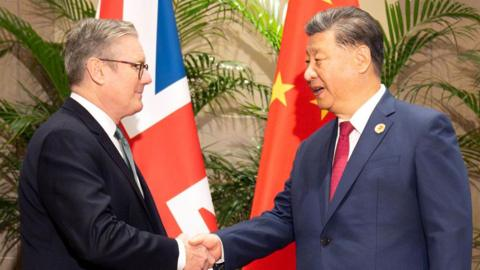
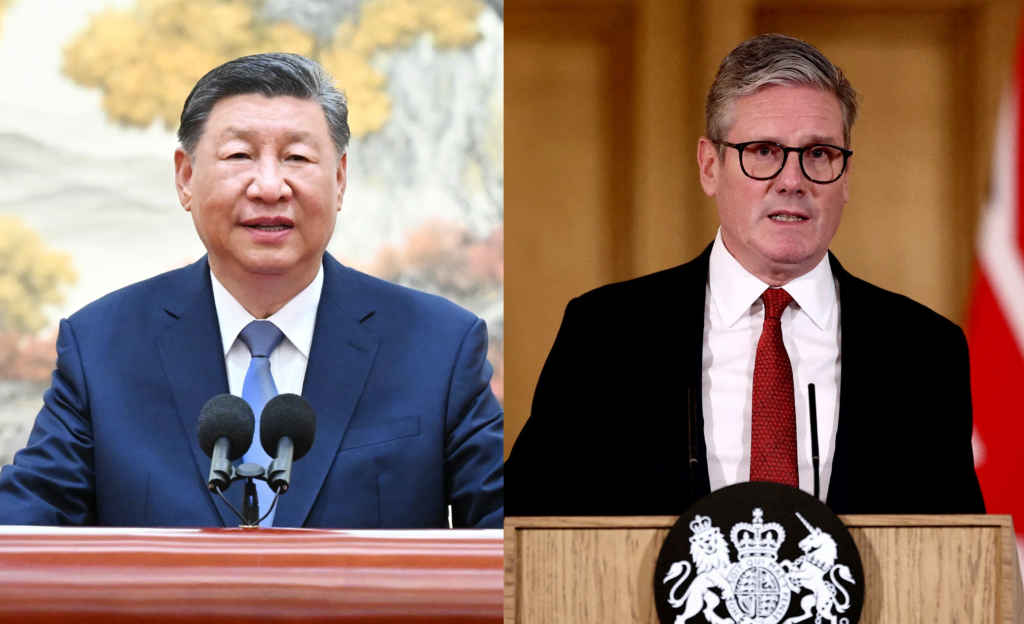
In a move signaling a potential thaw in a relationship strained by years of geopolitical tension, senior diplomats from China and the United Kingdom have concluded a series of “frank and constructive” talks, jointly announcing a commitment to a “managed and stable reset” of bilateral ties.
The dialogue, held this week at Beijing’s Diaoyutai State Guesthouse, brought together Vice Foreign Minister [Chinese Official Name] and the UK’s Permanent Under-Secretary at the Foreign, Commonwealth & Development Office, Sir [UK Official Name]. It marks the most significant dedicated bilateral engagement since the trade and political disputes that escalated sharply in recent years.
A Framework for “Responsible Management”
A joint communiqué, released simultaneously in both capitals, outlined a new “framework for the responsible management of the UK-China comprehensive strategic partnership.” Key pillars of the agreement include:
- Re-engagement of High-Level Channels: The resumption of annual Strategic Dialogues at the Foreign Minister level and the revitalization of economic and financial working groups.
- Trade & Economic Stability: A pledge to “address market access concerns through existing mechanisms” and collaborate on transnational issues like climate finance and green technology. Both sides explicitly endorsed fostering “non-politicized” business environments.
- People-to-People & Educational Ties: A commitment to rebuild academic, cultural, and tourism exchanges to pre-pandemic levels, seen as a critical foundation for long-term understanding.
- Managing Differences: The framework establishes new “dedicated communication lines” for discussing sensitive issues, including Hong Kong and human rights, with the stated aim of “preventing miscalculation and managing disagreements constructively.”
From ‘Golden Era’ to Frost and Back?
The relationship, once touted during the Cameron-Osborne era as a budding “Golden Era,” cooled considerably over issues such as Huawei’s role in UK telecoms, Beijing’s policies in Xinjiang, and London’s robust criticism of Hong Kong’s changing legal landscape. The UK’s increasing strategic alignment with AUKUS and its Indo-Pacific tilt further complicated the diplomatic calculus.
Analysts suggest both sides now have pragmatic reasons for recalibration.
“For China, a stable relationship with a major Western European power and global financial center is crucial amid tensions with the US and EU,” said Dr. Li Wen, a professor of International Relations at Tsinghua University. “For the UK, post-Brexit economic realities and the need for cooperation on global challenges like climate change and macroeconomic stability make engagement with China unavoidable.”
Cautious Reactions at Home and Abroad
Reactions have been mixed but measured.
In London, a government spokesman called the talks “a necessary step in protecting UK interests and seeking concrete solutions where our interests align.” Backbench critics from the China Research Group warned, however, that “any reset must not be a return to complacency, and must be grounded in unwavering support for British values and security.”
British business leaders, particularly in the financial services and automotive sectors, welcomed the prospect of greater predictability. “Clarity and open channels are the oxygen of international trade,” said a statement from the Confederation of British Industry.
In Washington, a State Department official noted they were “closely coordinating” with their UK allies, reiterating the importance of a “united approach” to the challenges posed by China.
The Road Ahead
The “reset” remains fragile and is explicitly not a return to the unqualified optimism of the past. The joint statement emphasized it is a “pragmatic, results-oriented process.” The first major test will be the expected visit of the UK Foreign Secretary to China later this year, and whether the resumed working groups can deliver tangible progress on market access and investment.
For now, both Beijing and London have signaled a shared desire to lower the diplomatic temperature and build a more predictable, if still complex, chapter in their long history. The world will be watching to see if this new framework can withstand the persistent strategic headwinds.