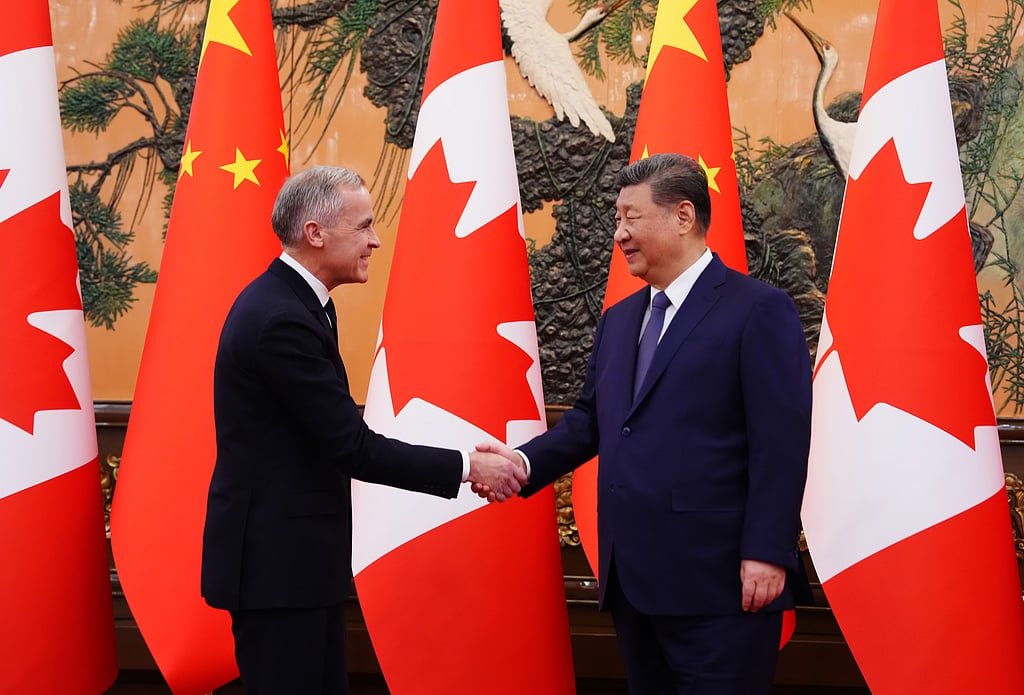
OTTAWA/BEIJING – Top diplomats from China and Canada held a closed-door meeting in Ottawa this week, marking the highest-level diplomatic engagement between the two countries in over four years. The talks, described by officials as “candid and necessary,” aimed to stabilize a relationship that has been in a deep freeze since the detention of Canadian citizens Michael Kovrig and Michael Spavor in 2018.
On the Agenda: Thorny Issues
The meeting, between Canadian Foreign Minister Mélanie Joly and her Chinese counterpart, Foreign Minister Wang Yi, focused on a fraught agenda:
Trade & Economic Coercion: Canada pressed China to lift what it sees as “arbitrary” trade barriers on Canadian canola, soybeans, and pork, imposed after the 2018 Huawei incident. Ottawa seeks a return to rules-based trade.
Foreign Interference: A primary Canadian demand was for China to cease all forms of alleged political interference in Canada’s domestic affairs, a major issue that has sparked a public inquiry in Ottawa.
Regional Security: Discussions touched on tensions in the South China Sea and the Taiwan Strait, with Canada reiterating its support for peace and stability across the Taiwan Strait, a position Beijing strongly contests.
Ukraine & Global Affairs: Canada urged China to use its influence with Russia to help end the war in Ukraine.
The Outcome: Minimal Thaw, Persistent Frost
No major breakthroughs were announced. The key outcome was an agreement to maintain open lines of communication and to hold follow-up discussions on trade and consular issues at a working level.
Canadian Statement: Minister Joly stated she “directly and unequivocally” raised concerns over interference and human rights, calling the dialogue “a step, but only a step, in a long path.”
Chinese Statement: Minister Wang emphasized that China-Canada relations have “no historical grievances nor fundamental conflicts of interest,” but warned that “the Taiwan issue is China’s internal affair and brooks no foreign interference.”
Why It Matters: Canada’s Delicate Balancing Act
This meeting underscores Canada’s challenging geopolitical position:
Pressure from Allies: As a key member of the Five Eyes intelligence alliance and a G7 nation, Canada faces strong expectations to present a united front with the US, UK, and Australia on confronting China.
Economic Reality: China remains Canada’s second-largest trading partner. Key sectors like agriculture, minerals, and education are eager to restore stable commercial ties.
Domestic Politics: With a public inquiry into foreign interference ongoing and a significant Chinese-Canadian diaspora, the government faces intense domestic scrutiny to be both firm and pragmatic.
Expert Analysis:
“This is relationship management at its most basic,” said Professor Wendy Dobson of the University of Toronto. “Neither side expects a reset. The goal is to install guardrails, prevent a complete derailment, and see if small, pragmatic wins on trade are possible while agreeing to disagree—loudly—on everything else.”
IN BRIEF | CANADA-CHINA CONTEXT
Arrests Aftermath: The “Two Michaels” were released in 2021, but the case of Michael Chong, a Canadian MP allegedly targeted by China, continues to fuel tensions.
Critical Minerals: Canada is actively restricting Chinese investment in its critical minerals sector, a move directly affecting Beijing’s strategic interests.
Next Steps: A meeting between Prime Minister Trudeau and President Xi is not anticipated in the near term, signaling relations remain at a cautious, ministerial-level dialogue.
Stay informed. Stay ahead.